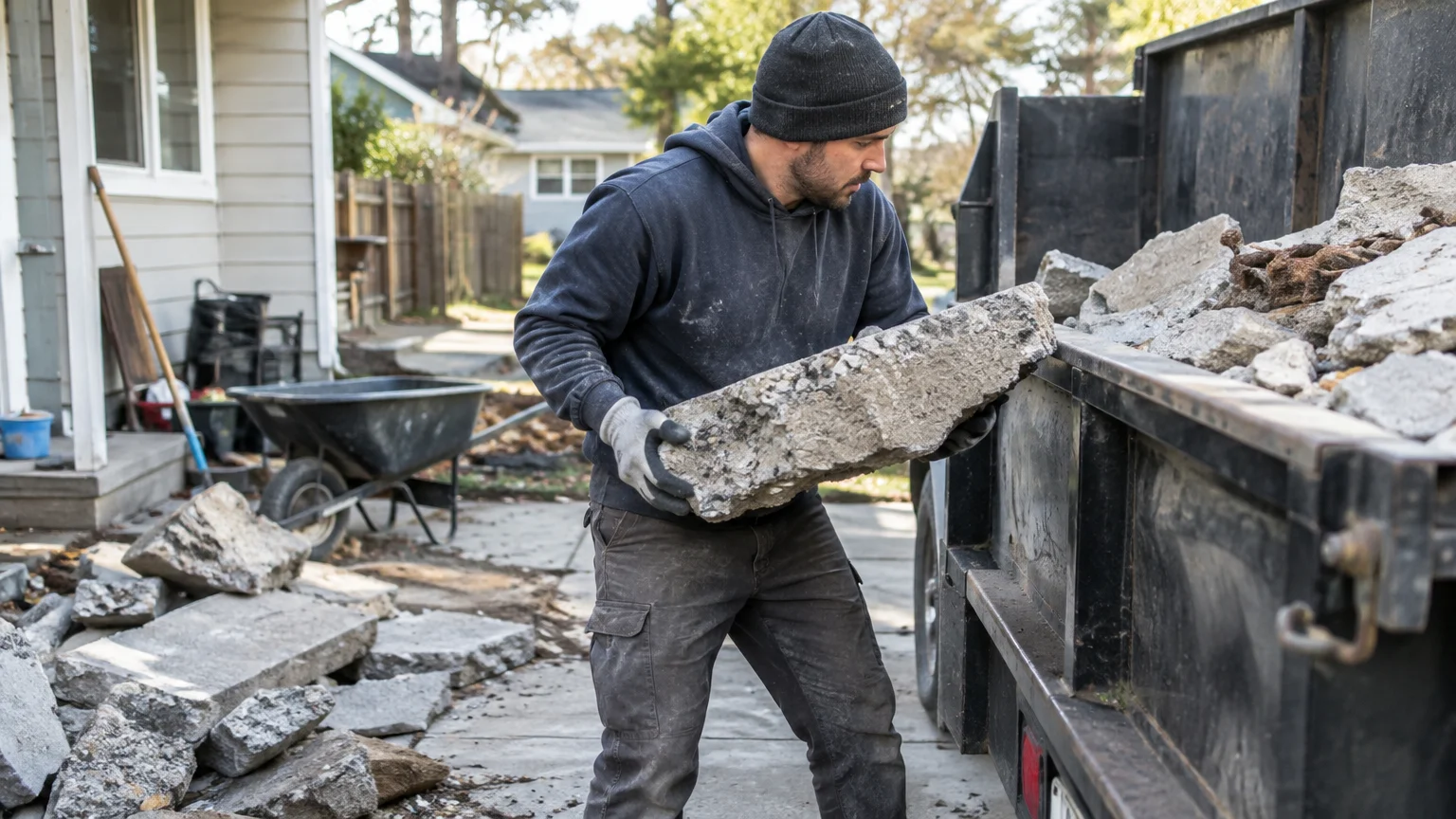
Concrete disposal FAQs help contractors and property owners plan a safe cleanup. Concrete disposal means taking broken concrete to a place that can reuse or handle it. The amount, weight, access, and material mix affect the job. In Castle Rock, clean concrete may have recycling options if a local facility accepts it.
How much does concrete disposal cost?
Concrete removal costs depend on the amount of debris, how easy it is to reach, and where it can go. A small pile in an open driveway may take less work than a large pile mixed with other debris. The final cost is confirmed on a quote after the job details are reviewed.
What factors affect the cost of removing concrete?
The amount and weight of the concrete both matter. So do the pile’s location and the path to the truck. Steps, narrow paths, or a long carry can make removal harder. Concrete in a clear driveway is often easier to reach than pieces spread across a work site. Large slabs may need to be broken into smaller pieces before removal.
The condition of the material can also change the plan. Clean concrete may have different disposal options from concrete mixed with soil, wood, drywall, or metal. Local rules and the receiving facility’s requirements matter, too. Contractors can share photos and describe the pile so Castle Rock CO Junk Removal can learn about the job before pickup.
How does concrete disposal compare with other construction debris removal?
Concrete is dense and heavy, so it can take more effort to move than many light materials. Drywall, wood scraps, and packaging may be easier to carry, but mixed loads can still need sorting. The right plan depends on the type and amount of debris, not only the pile’s size.
A cleanup may include other items along with concrete. Ask which materials can go in the same load before setting them out. Furniture removal and disposal, or appliance removal and disposal, may need a different plan from job-site rubble. A fridge, for example, should not be treated like broken concrete. Do not assume every item can go in one pile or to the same facility.
Can broken concrete be recycled?
Broken concrete may be recycled when a local facility accepts it and it is free of unwanted materials. Recycling choices vary by area and by the concrete’s condition. A hauler or facility can confirm where a certain load may go.
How is concrete processed for reuse?
At a recycling facility, concrete may be sorted and crushed into smaller pieces. The crushed material may then be used in some building or landscaping work. For example, it can serve as a base under new paving. Each facility decides what it accepts and how it handles each load.
Clean material is easier for a facility to check. Concrete with little or no wood, insulation, plastic, or soil may have more reuse options than a mixed pile. Bricks and asphalt may need to be handled on their own, based on the site’s rules. Tell the hauler what is in the pile before pickup so they can check the right disposal route.
For projects Castle Rock CO Junk Removal can help explain what details to share about the debris and pickup spot. The receiving facility still sets its own rules. Those rules can differ, so check them before mixing concrete with other renovation waste.
What can prevent concrete from being accepted for recycling?
A facility may refuse a load if it has materials that are not allowed. It may also turn down a load that is too mixed to sort. Soil, trash, drywall, wood, and metal can affect acceptance. Painted or treated pieces may need extra review, so describe them instead of guessing.
Keep other waste in a separate pile when you can. Do not add household junk just because it is nearby. If the cleanup also includes furniture or appliances, ask about those items on their own. For example, anyone wondering how to get rid of a fridge should check its handling needs instead of placing it with concrete chunks.
How do you prepare concrete for pickup?
Place concrete in a clear spot that the crew can reach, and keep it apart from other debris when possible. Tell the hauler what the pile contains and mention any limits on access. These steps can help prevent delays and make pickup safer for people at the job site.
What materials and debris can be included?
Accepted materials depend on the service and the place receiving the load. Broken concrete, bricks, and asphalt may be accepted, but name each material when you arrange the job. Drywall, lumber, tile, and other renovation debris may also be handled, though they may need to stay apart from heavy rubble.
Before pickup, make a short list of the materials in the cleanup. Mention sharp pieces, large slabs, or anything mixed into the pile. If a property cleanout includes furniture, ask about its removal and disposal as a separate item. Office furniture removal and disposal may also need a different plan from construction waste.
Some household items are not construction debris. If a project includes a broken chair or old couch, ask how to get rid of old furniture instead of adding it to the rubble pile without checking. The same goes for appliances. Confirm what is accepted before setting items out.
How can you make heavy debris easier and safer to remove?
Homeowners can clear a path, move light loose debris, and keep people away from the work area. They do not need a professional for these simple tasks. But breaking large slabs, lifting very heavy pieces, or moving debris near weak walls can cause injury or damage. Leave those jobs to trained workers with the right tools.
Keep the pickup path clear of cords, tools, and loose items. Do not stack concrete where it could fall or block an exit. If the debris is in a garage, yard, or behind a building, explain the route and any gate or stair access. A clear description helps the crew plan how to reach the pile.
How quickly can concrete be picked up?
Pickup time depends on crew availability, the amount of debris, site access, and where the load can go. A clear pile that is ready to reach may be easier to schedule than debris that still needs sorting or breaking. Ask about timing when you arrange service, especially if the project has a firm cleanup date.
What affects pickup timing and access at a job site?
A truck needs a safe place to park and a clear path to the concrete. Narrow drives, locked gates, stairs, active work areas, and blocked paths can affect access. Weather or other site conditions may also change how safely the crew can work.
Tell the hauler if pickup is at a business, a remodel, or a shared site. Contractors should share site rules, entry steps, and time limits. Property owners can point out the pile and keep pets and bystanders away. These details help everyone plan a smooth visit in Castle Rock.
What should contractors and property owners confirm before scheduling?
Confirm the material list, pile location, access route, and the day the area needs to be clear. Ask whether concrete, bricks, asphalt, and other debris can go together. Also check whether the pile should be separated or moved to a certain spot before the crew arrives.
Share photos if they help, and be clear about large pieces or mixed waste. Do not assume a facility will accept a material until someone checks. These steps can help contractors, remodelers, and property owners avoid confusion during job-site cleanup. The same care can help with office cleanout FAQs, retail removal FAQs, and house cleanout FAQs, where the materials and disposal needs may differ.
Frequently Asked Questions
How do you dispose of concrete chunks? Keep the chunks together in a clear area and ask a hauler or local facility what it accepts. Separate concrete from soil, wood, drywall, and household trash when possible. Large pieces may need special handling, so describe their size and location before arranging removal.
Can concrete go in a regular trash bin? Check with the waste provider before putting concrete in a household bin. Heavy rubble may not be accepted in standard service. A concrete removal or construction debris service can help find an option for the amount and type of material.
Can bricks and asphalt be picked up with concrete? They may be accepted, but rules vary by hauler and facility. Keep them separate when you can, then list each material when asking about pickup. This makes it easier to check whether one collection can handle the full pile.
Should concrete be separated from other construction debris? Yes, separating it is often helpful. Concrete is heavy, and mixed loads may have fewer reuse or disposal options. Keep rubble apart from wood, drywall, appliances, and furniture until the pickup plan is clear.
Key takeaways
- The amount, weight, access, and material mix shape the removal plan.
- Clean, separated concrete may have recycling options if a local facility accepts it.
- Keep heavy rubble apart from household items and other job-site waste.
- Clear access and a full material list can help prevent pickup delays.
Conclusion
A little planning can make concrete cleanup safer and easier. Check what the facility accepts, sort materials, and explain any access limits before pickup. For a concrete cleanup, Contact us to discuss the debris and arrange a collection. You can also learn more about Castle Rock CO Junk Removal and its junk removal services.
If you are not sure what you are dealing with, it is worth having someone look at it before it turns into a bigger job. Get in touch with Castle Rock CO Junk Removal today and we will tell you where you stand.